Are dental x-rays dangerous?
The need for dental x-rays has always been an issue for some patients. Recently I was told by a patient that he had erroneously thought for years that x-rays were done purely to make money!
In reality, there are a lot of areas in the mouth which would be totally invisible to the eye without x-rays. For example, we wouldn’t be able to check the jaw bones for tumours or other anomalies. We wouldn’t be able to see decay that had formed in between the teeth. And we definitely wouldn’t be able to diagnose some infections or injuries to the teeth and jaw bones. Without x-rays we would be ‘blind’.
A patient always has the right to refuse x-rays if they are not comfortable with having them done. They must realise, however, that this may mean an inability to diagnose dental problems which would therefore compromise the dentist’s ability to properly treat the problems. If we don’t know about them, we definitely can’t fix them!
So, what’s the real dose of radiation from dental x-rays and how does it compare to radiation doses from other things? Here’s a table to put things into perspective. (Click table for larger image).
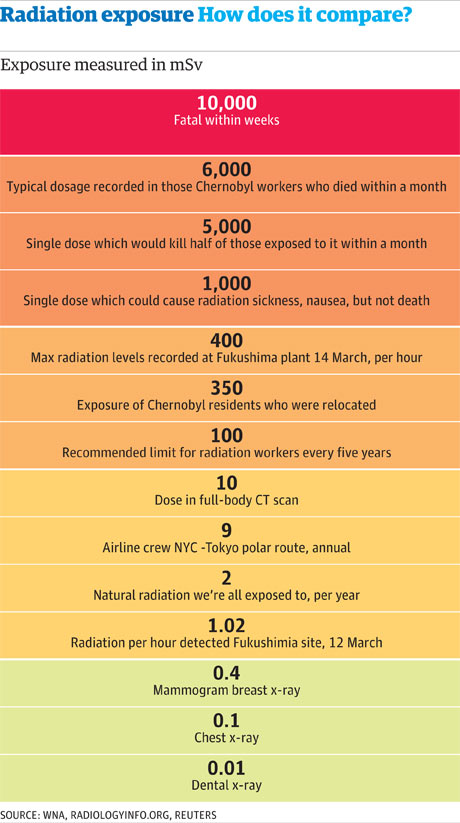
So, if you had 200 dental x-rays in 1 year (not that anybody would!), that would equal the same amount of radiation that you would receive from the environment, in 1 year.
Here at Dental Quarters, we only have digital x-rays. This means we can view and assess the x-ray in a matter of minutes, store it electronically, and most importantly for the patient, the radiation dose is much less than the previous ‘plain film’ x-rays.
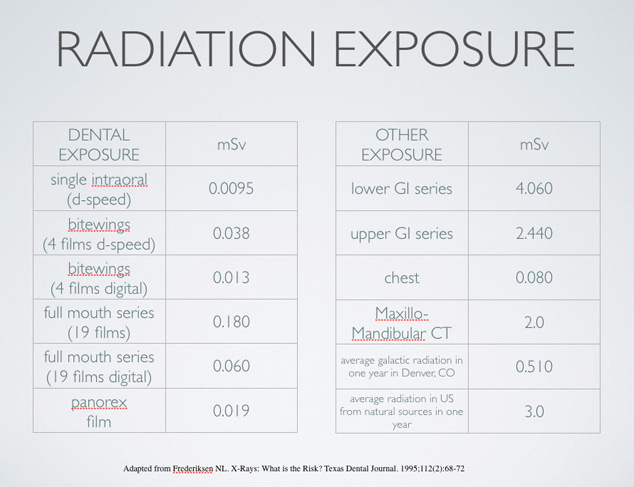
Table showing comparative radiation exposure for various types of x-rays
Unless there is something that needs to be investigated, usually routine x-rays are only updated every 18-24 months’ in case there are any new developments that we need to know about. So please rest assured that you aren’t going to turn green and start glowing from your routine dental x-rays!
DISCLAIMER:
Any surgical or invasive procedure carries risks. Before proceeding, you should seek a second opinion from an appropriately qualified health practitioner.